
Srinagar, Jan 13, KNT: Environmental governance in Jammu and Kashmir has come under intense scrutiny after disclosures before the National Green Tribunal revealed widespread violations of forest and environmental regulations across the Union Territory.
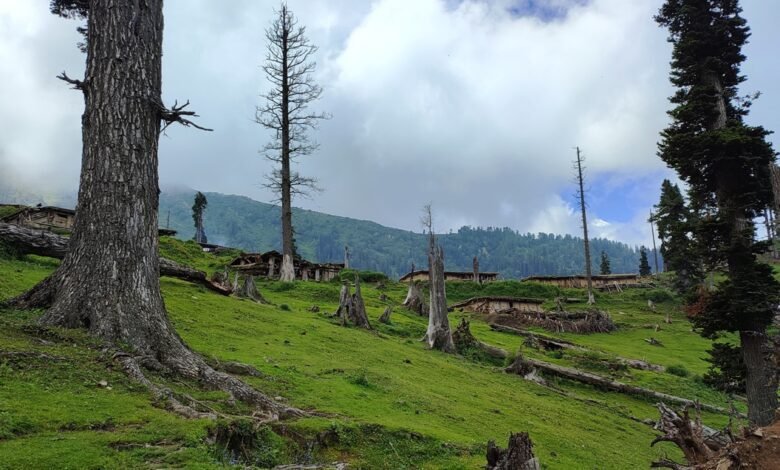
A report submitted by the Chief Secretary informed the Tribunal that 82,327 forest trees were felled across 145 development projects without compliance with mandatory compensatory afforestation requirements. The report stated that against a total compensatory afforestation liability of Rs 80.73 crore, an amount of Rs 45.33 crore remains unpaid, even as the projects were allowed to move ahead.
The disclosures as reported by the news agency Kashmir News Trust raised serious concerns regarding adherence to the Forest (Conservation) Act, 1980, which requires fulfillment of compensatory and mitigation conditions prior to diversion of forest land for non-forestry purposes. According to the report, these violations trace back to a State Administrative Council decision dated July 30, 2019, which modified an earlier Cabinet order of March 31, 2014. The revised decision permitted government sanctions for diversion of forest land even when full or partial compensatory payments were pending.
📢 8,000+ readers already joined for instant Kashmir News Trust updates
The Chief Secretary’s report also flagged specific projects of concern, including the construction of the Handwara to Bangus Road by the Public Works Department without mandatory forest clearances and environmental approvals. The report indicated that approvals were sought after commencement of work. It further highlighted illegal mining activities in the Bakiaker to Zachadara Nallah, carried out in violation of mining and environmental regulations, resulting in damage to riverine ecosystems and destabilisation of surrounding land.
The petitioner objected to the findings and pointed to a rise in human wildlife conflict incidents in the Rajwar area, linking the situation to large-scale forest diversion and habitat disruption. The report noted that forest proposals had recorded the presence of wildlife, yet projects were cleared without adequate mitigation measures or wildlife management plans, leading to frequent encounters between humans and wild animals.
Despite the admitted violations, the report revealed that no disciplinary, penal or criminal action had been proposed against public officials responsible for granting approvals. Observers before the Tribunal noted that submission of compliance reports without accountability undermines the environmental rule of law.
The matter arises from Original Application No. 163 of 2024 filed by environmentalist and advocate Rasikh Rasool Bhat, who has challenged the legality of the State Administrative Council decision, terming it arbitrary, unconstitutional and contrary to environmental jurisprudence.
During the proceedings, counsel for the Union Territory sought four weeks’ time to submit a detailed action taken report, including steps to recover unpaid compensatory afforestation dues and address the violations highlighted in the Chief Secretary’s report. The Tribunal has listed the matter for further hearing in April 2026.
The outcome of the case is expected to have far-reaching implications for forest conservation and administrative accountability in Jammu and Kashmir. [KNT]