

Deficient Snowfall in Kashmir Plains Raises Concern
Locals, Experts Warn of Long-Term Impact if Dry Spell Persists

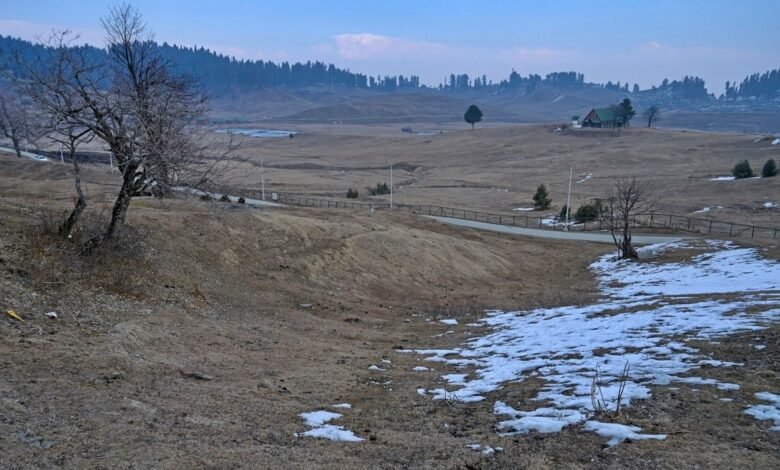
Srinagar, Jan 18, KNT: A prolonged spell of deficient snowfall in the Kashmir plains has triggered growing concern among locals, farmers and experts, as large parts of the Valley continue to witness an unusually dry winter this season.
Traditionally, the Kashmir plains receive multiple spells of snowfall during peak winter, replenishing water bodies, sustaining soil moisture and supporting agriculture. However, this winter has seen only scant snowfall in most plain areas, with dry and cold conditions dominating for weeks.
Farmers said the lack of snowfall is already affecting winter crops, particularly horticulture and rabi cultivation. They said snowfall plays a critical role in maintaining soil moisture and protecting crops from frost damage. “If this dry pattern continues, it will directly impact apple orchards and other crops in the coming months,” growers said.
Experts warned that deficient snowfall could have serious implications for water availability during the summer. Snow accumulation in plains and surrounding areas acts as a natural reservoir, gradually feeding rivers, streams and groundwater. Reduced snowfall, they said, may lead to lower water levels in rivers and lakes, affecting drinking water supply, irrigation and hydropower generation.
📢 8,000+ readers already joined for instant Kashmir News Trust updates
Locals also expressed concern over the environmental impact, noting that dry winters increase the risk of forest fires and reduce groundwater recharge. “Snow is essential for maintaining ecological balance. Its absence is alarming,” residents said.
Meteorological officials said that while higher reaches have received intermittent snowfall, the plains have largely remained dry. They said weather patterns are being closely monitored, and any significant snowfall activity in the coming weeks will be crucial to offset the deficit.
The ongoing dry winter has added to worries about changing climate patterns in the Valley, with many pointing out that snowfall has become increasingly erratic in recent years. [KNT]