

Srinagar, Oct 22, : A congested road, an obstructed footpath, or the growing concern over drug abuse may appear to be separate civic issues, but for the people of Anantnag, they are all part of a larger question: how effectively does policing respond to the everyday problems of ordinary citizens?
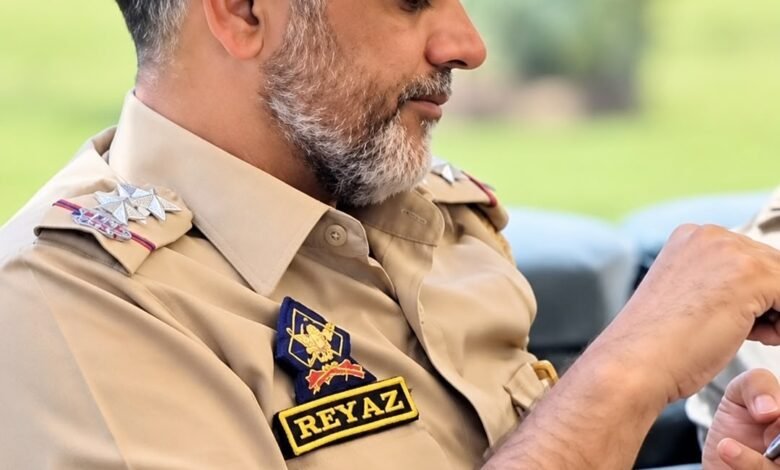
The recent administrative transfer of Station House Officer (SHO) Riyaz Ahmad has brought this question into sharp focus. His tenure is being widely recalled by residents who appreciated his hands-on approach to community policing—particularly his targeted efforts to curb drug abuse, streamline chaotic traffic, and reclaim encroached public spaces.
For locals who welcomed his interventions, his departure is far more than a routine administrative reassignment. It has become an occasion to reflect on the tangible difference an accessible, disciplined, and public-oriented police officer can make to the social fabric of a bustling town.
📢 8,000+ readers already joined for instant Kashmir News Trust updates
“People remember an officer not only for the high-profile cases he solves, but also for the everyday problems he takes seriously. When someone pays attention to the difficulties we face daily, that leaves a lasting impression,” said Nisar Ahmad, a local resident.
Traffic snarls along the Mehndikadal–Janglat Mandi stretch have long been a source of intense frustration for commuters, local traders, and emergency services. In a busy commercial hub, prolonged gridlocks can turn routine daily errands into an exhausting ordeal.
Efforts spearheaded during Ahmad’s tenure to enforce traffic discipline were widely praised by locals seeking relief from persistent bottlenecks. Commuters said that effective traffic management is not merely about keeping vehicles moving—it is about ensuring equal access to public roads and respecting citizens’ time.
“Every minute matters when someone is travelling for work or facing an urgent situation. We need traffic management that works consistently, not just occasionally. When an officer makes a sincere effort to fix the situation, people naturally appreciate it,” said Shabir Ahmad, a frequent commuter along the route.
Beyond vehicular regulation, the illegal occupation of footpaths and roads by street vendors has remained a sensitive challenge in Anantnag’s busiest market quarters. Pedestrians—particularly the elderly, children, and persons with mobility issues—were frequently forced to walk in the middle of busy roads alongside moving traffic due to blocked walkways.
Drive-led actions against encroachments during Riyaz Ahmad’s posting, alongside efforts to relocate street vendors to designated alternative spots, were viewed as a balanced step toward restoring shared public spaces.
“Footpaths are meant for pedestrians. People should not have to risk their safety walking on roads because there is no space left for them. At the same time, vendors need a dignified place to earn their livelihood. The administration must balance both concerns fairly,” noted Kaiser Sultan, a local shopkeeper.
Substance abuse has emerged as a critical social challenge across Jammu and Kashmir, affecting young people, families, and wider neighborhoods. Addressing it requires an active, multi-pronged effort involving law enforcement, healthcare professionals, educators, and community leaders.
Ahmad’s persistent crackdown on illegal drug networks earned widespread support from residents concerned about youth welfare. However, locals emphasize that policing is only one part of a larger equation.
“When it comes to drugs, every family wants to see young people protected. Police action is essential, but it must be sustained over time. We need continuous awareness, counselling, and rehabilitation alongside strict legal action against drug networks,” a local resident shared.
Police transfers are an inevitable part of administrative governance, with officers regularly rotating across postings. Yet, when an officer who has built strong community rapport leaves, it highlights the broader expectations citizens hold for public service.
Residents frequently measure policing not just through complex criminal investigations, but through prompt responses to daily grievances, street safety, and the fair management of public assets.
“Riyaz Ahmad’s transfer may have brought his assignment in Anantnag to an end, but the civic concerns he addressed remain part of the town’s daily reality. Public confidence is built through actions that may appear small individually, but matter greatly to the people affected by them,” saida local Civil Society President.
As the town bids farewell to the officer, the consensus among residents remains clear: the true metric of effective governance lies in institutional continuity.
“Officers will continue to come and go, but work that benefits the public must go on. What people want is not just a good officer for a short term, but an active system that responds to their problems every day,” another resident, Bashir Ahmad said. [KNT]