

Kashmir’s Chinar Loss Mounts: Fresh Felling in Handwara Sparks Questions Over Development Priorities

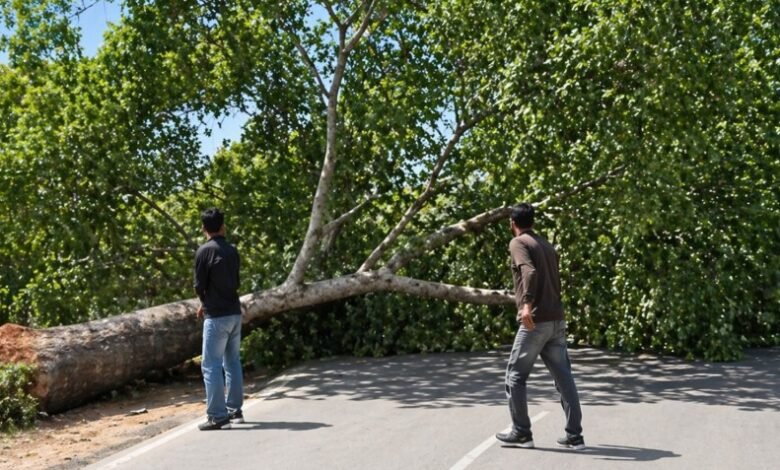
Srinagar, April 23, KNT: The felling of a massive Chinar tree near Ganapora Bus Stop in the Kralgund area of Handwara in north Kashmir’s Kupwara district during ongoing work on National Highway-701 has triggered widespread public concern, with fresh questions being raised over environmental safeguards in development projects.
The incident comes amid a series of similar cases across the Valley, intensifying debate over whether infrastructure expansion is being pursued at the cost of Kashmir’s ecological and cultural heritage.
Reports indicate that the tree was removed as part of highway construction activity in the area. Images and videos circulating on social media platforms have drawn sharp reactions, with users expressing concern over the continued loss of Chinar trees, which are widely regarded as a symbol of Kashmir’s identity.
📢 8,000+ readers already joined for instant Kashmir News Trust updates
The latest incident follows earlier instances of tree felling in different parts of the Valley. In Srinagar’s outskirts, mulberry trees were cut during road work along the Bagh-e-Mehtab–Kralpora stretch. In Anantnag district, several Chinar trees were axed last year. Two years ago, more than 200 trees were removed at Amar Singh College, a case in which the National Green Tribunal later took cognizance.
Together, these incidents have contributed to a growing perception of a pattern, with environmental concerns increasingly being voiced alongside development initiatives.
While authorities have not issued an official statement regarding the Handwara felling, the issue has gained traction online, where users have questioned whether adequate environmental assessments and mitigation measures are being implemented.
The Chinar tree holds deep cultural significance in Kashmir, featuring prominently in literature, folklore, and the Valley’s seasonal landscape. Environmental observers have repeatedly warned that the species is under pressure from urbanization, illegal logging, and climate-related stress.
The continued decline of Chinar trees, they say, risks long-term ecological and cultural consequences if not addressed through conservation-focused planning.
The current episode has renewed calls for stricter oversight, transparent environmental clearances, and preservation mechanisms to ensure that development projects do not irreversibly impact heritage assets. [KNT]